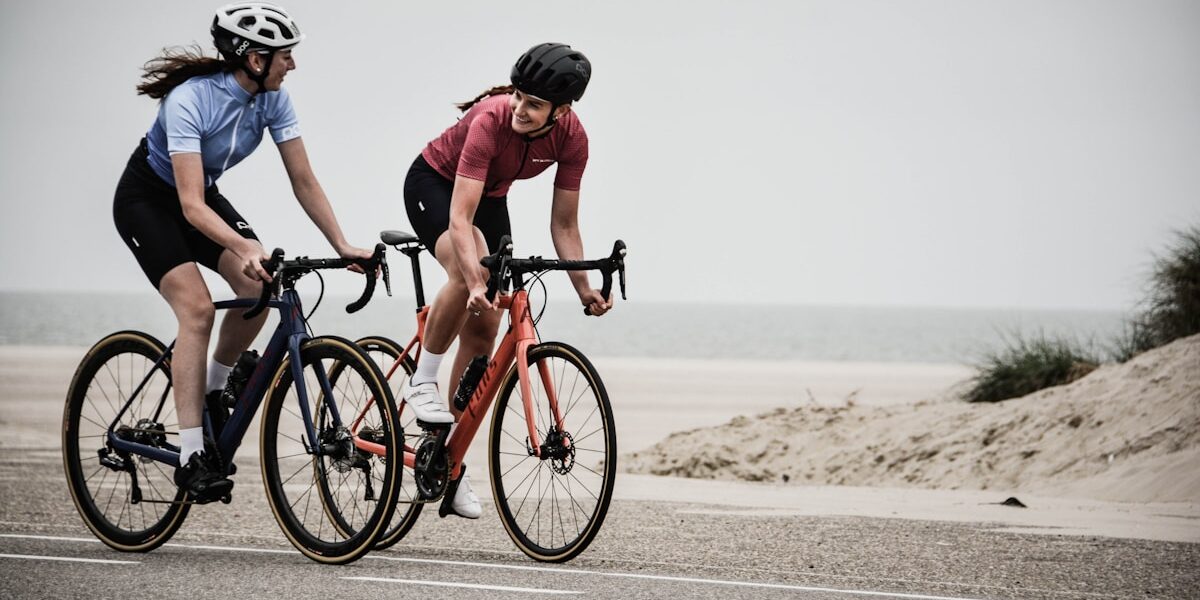
Buying your first road bike is exciting and terrifying in equal measure. Walk into most bike shops and you’ll get hit with a wall of jargon—groupsets, geometry, endurance vs race fit. Here’s how to cut through the noise and not overspend.
Aluminum Is Fine. Seriously.
Everyone wants carbon fiber. I get it—it sounds fast. But for your first road bike? Aluminum is the move. Modern aluminum frames are light, stiff, and can take a beating when you inevitably drop it learning to clip in. Carbon is fragile and expensive to repair.

Steel’s having a comeback with the gravel crowd, but it’s heavier. Titanium is bulletproof and rides like a dream—it’s also $3,000 for the frame alone. Skip it for now.
Size Is Everything (Fit Is More)
Here’s where shops make their money back: the upsell to a professional bike fit. Is it worth $200+? Probably not for your first bike. What IS essential: getting the right frame size.
Don’t trust online size calculators blindly. Go to a shop and throw your leg over a few bikes. You should be able to straddle the top tube with an inch or two of clearance. Reach to the handlebars should feel natural, not stretched or cramped.

Groupsets: The Honest Breakdown
Shimano Claris (8-speed) or Sora (9-speed) at the entry level work fine. They shift, they brake, they’re rebuildable. Will you notice the difference vs. Shimano 105? Yes—105 shifts smoother, feels more precise. But Claris isn’t going to ruin your rides.
One thing I’d spend extra on: disc brakes. They’re becoming standard anyway, and stopping in the rain without rim brakes squealing is worth every penny.
Budget Reality Check
That $800 bike is actually $1,100 by the time you add pedals (bikes don’t come with them—surprise!), shoes, a helmet that doesn’t suck, a spare tube, and a basic pump. Factor that in before you stretch your frame budget.
Buy the bike you can afford now and ride the wheels off it. Upgrading later is half the fun anyway.



Leave a Reply