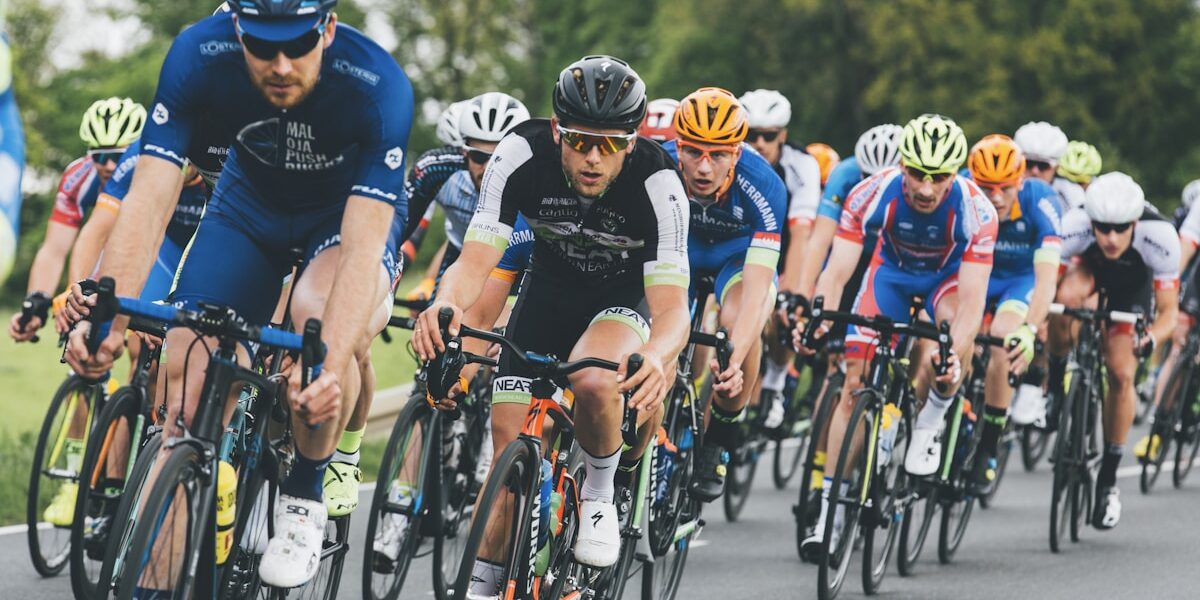
July 4, 2026. Barcelona. A team time trial along the Mediterranean. For the first time since 1971, the Tour de France opens with riders racing against the clock as a squad—and for the first time ever, the Grand Départ happens in Spain.
If that doesn’t get your attention, the finale will: back-to-back summit finishes on Alpe d’Huez. Same mountain, two consecutive days. Nobody’s ever asked Tour riders to do that before.
This is going to be chaos. Beautiful, glorious chaos.
Barcelona: A History-Making Start
The Tour has started in 12 different countries over 122 years. Never Spain—until now. Barcelona won the bid and they’re going big: 19.7 kilometers from the Fòrum, along the coast, through the Olympic Port, finishing at the 1992 Olympic stadium on Montjuïc.
The team time trial format is rare enough. But here’s the twist—individual times count at the summit. So you’re racing as a team, but your personal yellow jersey hopes live or die on your own legs at the top. Seconds will matter.
Stage 2 stays in Catalonia. Stage 3 crosses into France and immediately hits the Pyrenees. Nearly 4,000 meters of climbing with an uphill finish. If you showed up to Barcelona hoping to “ease into” this Tour, you’re in trouble by day three.
The Pyrenees Come Way Too Early
Prudhomme and his route designers have been clear: no slow builds, no easy weeks. The Col d’Aspin and Col du Tourmalet arrive on Stage 6. That’s 4,150 meters of climbing in a single stage—numbers that typically appear in week three.
It’s a gamble for everyone. Come in with peak form from spring and you could establish a lead that lasts three weeks. Come in slightly off and watch your Tour ambitions evaporate before the first rest day.
The Middle: Sprinters Get Their Days
The flat stages through central France will feel almost like recovery after that opening. Sprinters finally get their chances. GC guys mark each other and save their legs. The Massif Central rolls through. The Vosges add interest.
Stage 16 brings the only individual time trial: 26 kilometers in Thonon-les-Bains. Just one TT in the whole race. On paper, bad news for time trialists like Evenepoel. In reality? After two weeks of climbing, everyone’s wrecked. The specialist advantage shrinks when your legs are cooked.
Plateau de Solaison: The Unknown
Stage 15 features the first-ever Tour ascent of Plateau de Solaison. New climbs always produce chaos—nobody has racing memory of how the road reacts to 180 exhausted guys attacking each other. The riders who reconned it during training hold the advantage. Everyone else is guessing.
And Then: Alpe d’Huez. Twice.
Stage 19. Gap to Alpe d’Huez. Only 128 kilometers but brutally concentrated. Those 21 hairpins await legs that have already absorbed 18 stages of damage. Short stages invite attacks from the bottom.
Stage 20 might be the hardest single day in modern Tour history. 5,600 meters of climbing in 145 kilometers: Col de la Croix de Fer, the Télégraphe, the Galibier at 2,642 meters (the race’s highest point), then descending to approach Alpe d’Huez from the back via Col de Sarenne.
The same 21 hairpins. Again. On dead legs. After the Galibier.
Whoever wears yellow into Paris will have earned it on this mountain. Twice.
So Who Wins?
Pogačar is the obvious favorite. He’s chasing a fifth Tour—something nobody’s done in 30 years. This route is basically designed for him: mountains everywhere, minimal time trial exposure, constant opportunities to attack. His one 2025 loss to Vingegaard came in a long TT at the Dauphiné. This route has 26 kilometers against the clock. He’s probably fine.
Vingegaard is planning a Giro-Tour double, which is either genius or madness. If he survives the early Pyrenees intact, those Alpe d’Huez stages are his kind of terrain. Nobody else can match his sustained climbing when he’s fully fit. The question is whether the Giro takes too much out of him.
Evenepoel has switched to Red Bull-Bora and declared his intention to beat Pogačar. He’s an incredible time trialist, but 26 kilometers of TT isn’t enough to build a decisive lead—which means he needs to climb with the best two in the world. He’s not quite there yet. But he’s close, and this generation of racing has years left to run.
The Numbers
3,333 kilometers. 54,450 meters of elevation. Eight mountain stages, five summit finishes. Seven flat stages for the sprinters. Two time trials (team and individual). 184 riders from 23 teams at the start.
Rest days July 13 and 20—neither before the hardest stages, because of course not.
Why This Route Matters
For years, critics complained Tours were decided by time trials. Climbing was for losing time; TTs were for gaining it. This route says otherwise. One 26km TT, eight days of serious climbing, and a finale that demands you attack on the hardest days or accept defeat.
Pogačar probably wins. But the route gives Vingegaard and Evenepoel genuine chances to take it from him. And that’s the point—force the best riders to race each other, not the clock.
July 4-26, 2026. Barcelona to Paris via everything the mountains can throw at them. This is going to be a good one.

Leave a Reply