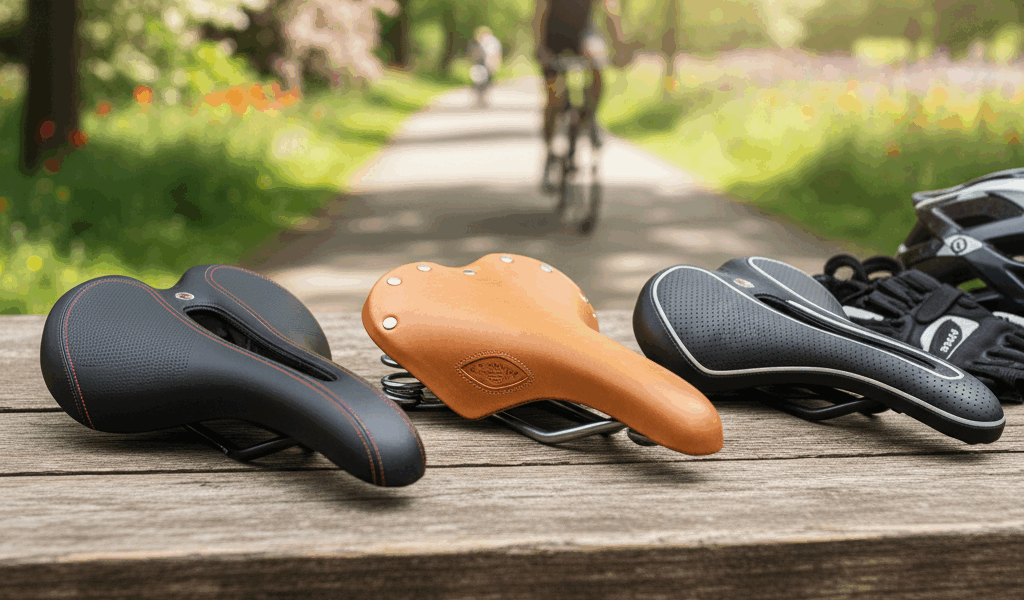
The stock saddle on your bike was chosen by someone who never met you, never measured your sit bones, and frankly doesn’t care if you’re comfortable at mile 40. It came with the bike because it cost the manufacturer next to nothing and looked okay in the product photos. Whether it actually fits your anatomy was never part of the calculation.
I spent my first three years of cycling on saddles that didn’t work for me, assuming the discomfort was just part of the deal — something you learned to tolerate. That’s wrong. A properly fitted saddle shouldn’t hurt on a four-hour ride. Finding the right one takes some effort, but it starts with understanding what’s actually going on down there.
Why Saddles Hurt
Your sit bones—the ischial tuberosities at the bottom of your pelvis—are designed to support your body weight. When you sit on a chair, they make contact with the seat. When you sit on a bike saddle, the same bones should bear the load.
Problems arise when the saddle doesn’t match your sit bone width. Too narrow and the bones hang over the edges, transferring weight to soft tissue that isn’t built for pressure. Too wide and the inner edges of the saddle chafe your thighs with every pedal stroke.
Riding position changes everything. Aggressive road cyclists rotate their pelvis forward, shifting contact toward the pubic rami—the front of the pelvic structure. Upright riders keep their pelvis vertical, with weight firmly on the sit bones. The saddle shape that works in one position fails in the other.
Here’s the counterintuitive part: more padding usually makes things worse, not better. That big cushy gel seat cover from Amazon? It increases the contact area, spreading pressure across soft tissue that was never meant to bear your weight. I bought one early on thinking it would solve my problems. It created new ones. A firm saddle with the correct shape for your anatomy will almost always outperform a soft, squishy one — even though the soft one feels better for the first ten minutes.
Measuring Your Sit Bones
You can get a rough measurement at home with a piece of corrugated cardboard on a hard surface — stairs work well. Sit down, lean forward slightly to approximate your riding position, then stand up and measure the distance between the two deepest indentations. That gives you a ballpark sit bone width. Mine came out to about 118mm, which pointed me toward 143mm saddles.
For a more precise number, find a bike shop with pressure mapping. You sit on a gel pad or digital sensor that shows exactly where your weight concentrates. The readout tells you not just sit bone width but how your pelvis actually loads the saddle at different forward angles. It’s worth the $20-30 most shops charge for this — or free at many Specialized dealers.
Add 20-25mm to your sit bone measurement to get an appropriate saddle width. The extra millimeters account for the way your anatomy interacts with saddle shape and padding. Someone with 120mm sit bone width typically fits saddles around 143mm wide.
Saddle Shapes That Work
Flat saddles suit riders who move around frequently—shifting position for climbing, sprinting, and cruising. The consistent profile allows movement without catching edges. Aggressive racers and riders who don’t stay planted often prefer flat profiles.
Curved saddles lock your pelvis into a specific position. The raised rear cradles the sit bones; the dropped nose keeps you from sliding forward. Riders who stay in one position for long periods often find curved saddles more comfortable because they support consistent posture.
Cutouts and channels relieve pressure on soft tissue between the sit bones. For riders who experience numbness or pain in sensitive areas, these relief features can solve problems that no amount of padding adjustment will fix. Many saddles now offer relief channels as standard.
Nose width matters for leg clearance. Narrow noses reduce thigh chafing on the pedal stroke. Wide noses provide more support for riders who shift forward frequently. Your riding style determines which trade-off makes sense.
Finding What Works
Test rides reveal what specs sheets cannot. Thirty minutes on a saddle in realistic riding conditions tells you more than any review. Many bike shops loan demo saddles for extended testing—take advantage of this whenever possible.
Give new saddles time. The first ride rarely tells the whole story. Muscles adapt; riding position adjusts; what felt strange initially sometimes becomes comfortable after a few weeks. But don’t suffer through obvious mismatches hoping adaptation will save them.
Position adjustments sometimes matter more than saddle selection. A saddle too high, too far forward, or angled incorrectly will hurt regardless of shape or brand. Before buying another saddle, confirm your current one is properly positioned.
Bike shorts with quality chamois pads work in partnership with your saddle. Cheap shorts with thin or poorly positioned padding undermine even excellent saddles. The interface between your body and the bike includes both components.
Saddles That Consistently Work
Certain saddles have reputations for fitting most people acceptably. They’re not perfect for everyone, but they’re reasonable starting points.
The Specialized Power is what I’m currently riding on my road bike. Short nose, deep relief channel, designed for riders with forward pelvic rotation. If you experience numbness or soft tissue pressure in an aggressive position, this is the first saddle I’d try. It comes in 143mm, 155mm, and 168mm widths, so there’s a real chance one of them fits you.
The Fizik Aliante has been around for years because it works for a lot of people. Slightly curved profile, flexible shell that provides some give over rough roads — it’s a good choice for riders who want a defined seating position without extreme shaping. I rode one for two seasons before switching to the Power.
Brooks B17 — the leather saddle your grandpa might have ridden. Still relevant after over a century of production. The leather molds to your specific anatomy over hundreds of miles, creating what loyal Brooks riders describe as a custom fit. The break-in period is real (think 500+ miles before it fully conforms), but the people who love Brooks really love them. Great for touring and upright riding positions.
WTB makes the best value saddles I’ve come across. Nothing exotic about them — just competently designed shapes at $40-60 price points that are widely available. A WTB Volt that matches your anatomy will easily outperform a $200 boutique saddle that doesn’t. Don’t let the price tag fool you.
When Nothing Works
Some people try saddle after saddle without finding comfort. At that point, underlying issues might need addressing. Professional bike fits assess position comprehensively. Physical therapy can identify mobility or flexibility limitations that affect saddle interaction. Medical conditions occasionally require specialized solutions beyond conventional saddle selection.
But for most riders, the problem is simpler: they haven’t found the right saddle yet, or the one they have isn’t positioned correctly. Systematic testing with attention to shape, width, and position eventually produces results.
Cycling shouldn’t hurt. If your rides end with saddle soreness dominating your experience, something is wrong. Fix the equipment problem and the sport becomes what it should be—miles covered in comfort, not endured in pain.




Leave a Reply