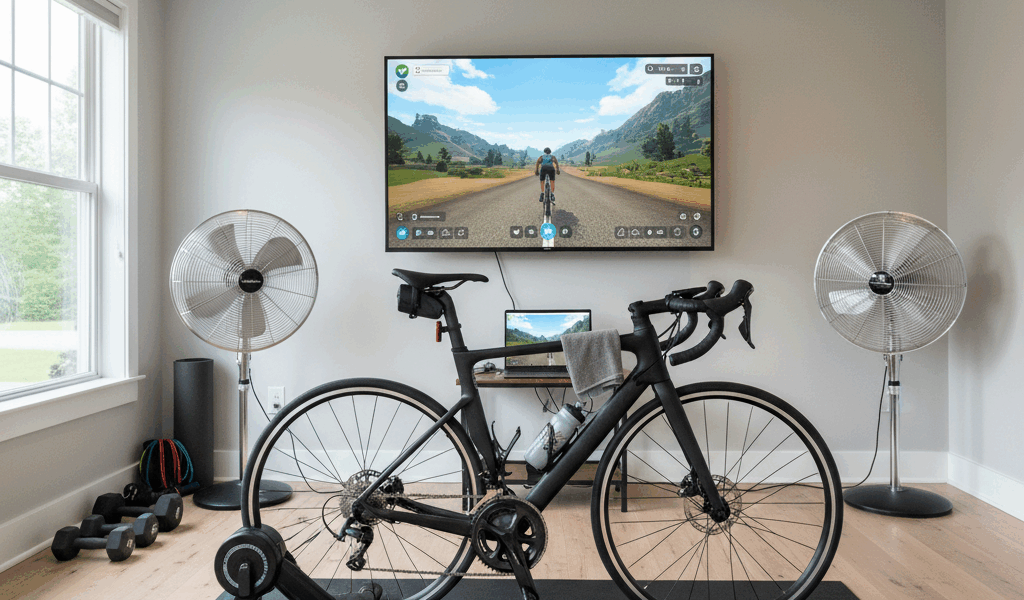
Three years ago I bought a Wahoo Kickr thinking I’d use it when it rained. Fast forward to today and I’m logging as many indoor miles as outdoor ones — sometimes more during the winter months. What changed wasn’t the hardware, though trainers have gotten better. It was the apps. The software side of indoor cycling has matured to the point where training inside isn’t just a grim substitute for riding outdoors. It’s a genuinely different experience that complements road riding in ways I didn’t expect.
Zwift: The Social One
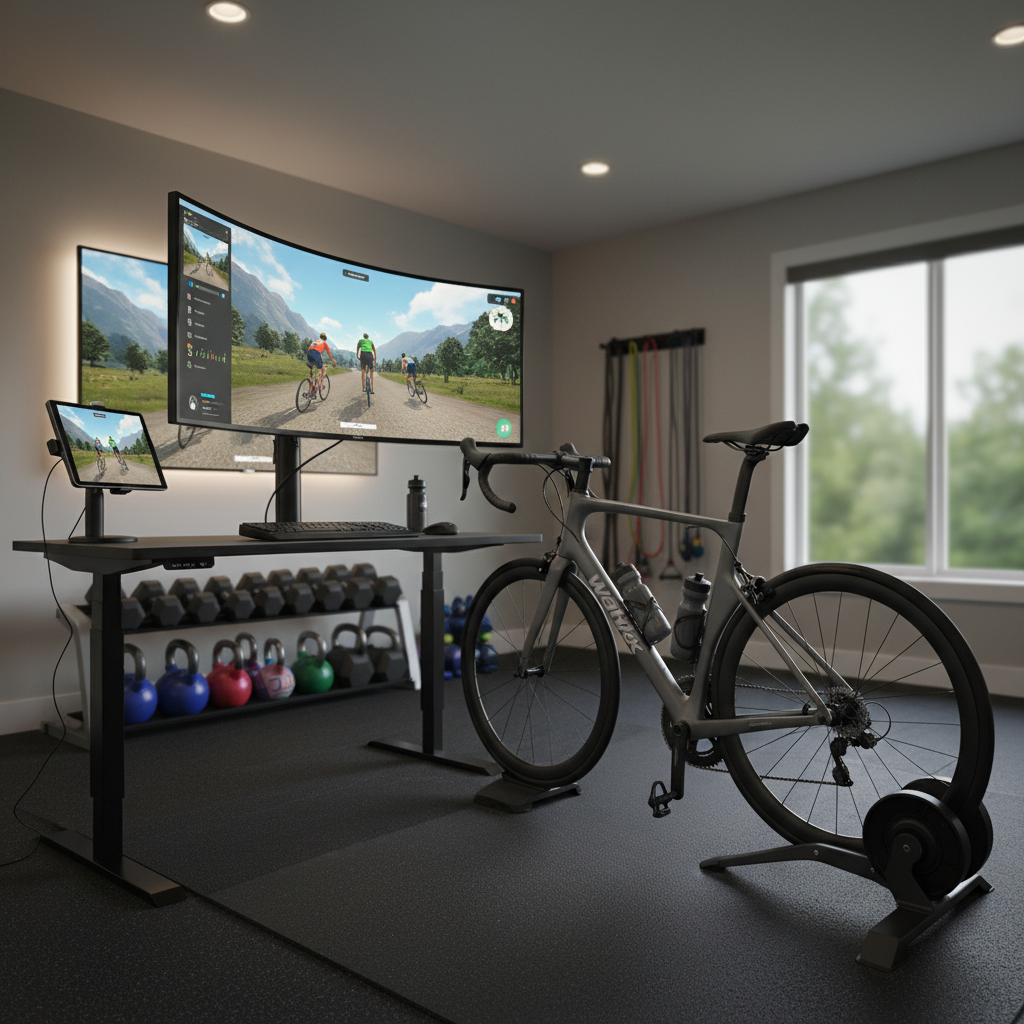
Zwift is where most people land first, and there’s a reason it dominates market share. You ride through virtual worlds alongside actual humans, join organized group rides, and race people who are suffering in their garages just like you are. The gamification runs deep — XP, level-ups, virtual bike unlocks, route badges — and it works. Those hooks get people on the trainer who wouldn’t otherwise bother, and consistency matters more than any single workout ever will.
The racing deserves its own mention. I’ve done Zwift races that left me lying on the floor staring at the ceiling, heart rate pinned at max for forty minutes. The competition is real even though the road isn’t. For people who need external pressure to push hard — and most of us do — that competitive element makes an enormous difference in training quality.
The downsides are real, though. The subscription runs $15/month, which adds up. After several hundred hours the worlds start feeling repetitive — you know every corner of Watopia and every building in Makuri Islands. And pure training effectiveness sometimes takes a backseat to entertainment. Zwift is excellent at getting you on the bike; it’s less focused on optimizing what you do once you’re there. For consistency alone, though, nothing else in the market matches it for most riders.
TrainerRoad: The Serious One
If Zwift makes training fun, TrainerRoad makes training productive. Structured workouts calibrated to your current fitness, adaptive training that adjusts difficulty based on how you actually perform (not just what you tell it), and analytics that track meaningful progress rather than just pretty graphs.
I ran a full TrainerRoad base-build-peak cycle over last winter and came out of it measurably stronger than any previous off-season. The workouts are precisely hard — they push you to the edge of what you can handle without burying you so deep that tomorrow’s session suffers. That’s the science behind periodized training, and TrainerRoad applies it well. My FTP jumped 18 watts over four months, which at my level is significant.
The interface is deliberately spartan. No virtual worlds, no avatars, no leaderboards. Just you, the workout graph, and your power numbers. Some people find this intolerably boring. I actually prefer it — without the distraction of chasing someone’s wheel in a fake race, I focus entirely on hitting the prescribed targets. The workout gets done faster and more effectively. But if you need visual stimulation to stay motivated, TrainerRoad will feel like watching paint dry.
Rouvy: The Scenic One
Rouvy takes a different approach entirely: real video of real roads, synced to your trainer so the resistance matches the actual gradient you’re watching. You want to ride Alpe d’Huez? The Col du Tourmalet? Some random coastal road in Croatia? Someone probably filmed it, and Rouvy will make your legs hurt accordingly.
The route library is massive — thousands of real-world segments from around the world. The virtual tourism aspect adds variety that pure training platforms can’t touch. When I’m sick of staring at a workout graph or Zwift’s digital landscape, switching to a filmed descent through the Italian Alps resets my enthusiasm. It’s also the closest you can get to previewing a real route before you actually ride it, which has practical value for race or event preparation.
Free Alternatives Worth Knowing About
YouTube has an enormous library of indoor cycling content — scenic ride videos, structured workout sessions, spin class formats. Quality ranges from excellent to unwatchable, but the price is right. I keep a few good YouTube channels bookmarked for days when I want variety without another subscription fee. GCN’s training videos are solid, and channels like Scenic Routes produce high-quality ride footage that works well with any smart trainer.
Choosing What Actually Works for You
The best indoor cycling app is whichever one reliably gets you on the trainer. That’s not a cop-out answer — it’s the truth. The fittest indoor cyclists I know aren’t the ones with the most optimized training plans. They’re the ones who consistently show up, and the app that makes showing up appealing is the right app regardless of what the training science says.
If you need social accountability and competition, Zwift. If you want structured progression and measurable results, TrainerRoad. If you need scenery and route variety to stay engaged, Rouvy. Most platforms offer free trials — use them. Ride each one for a week and see which one makes you want to clip in again tomorrow. That’s your answer.



Leave a Reply