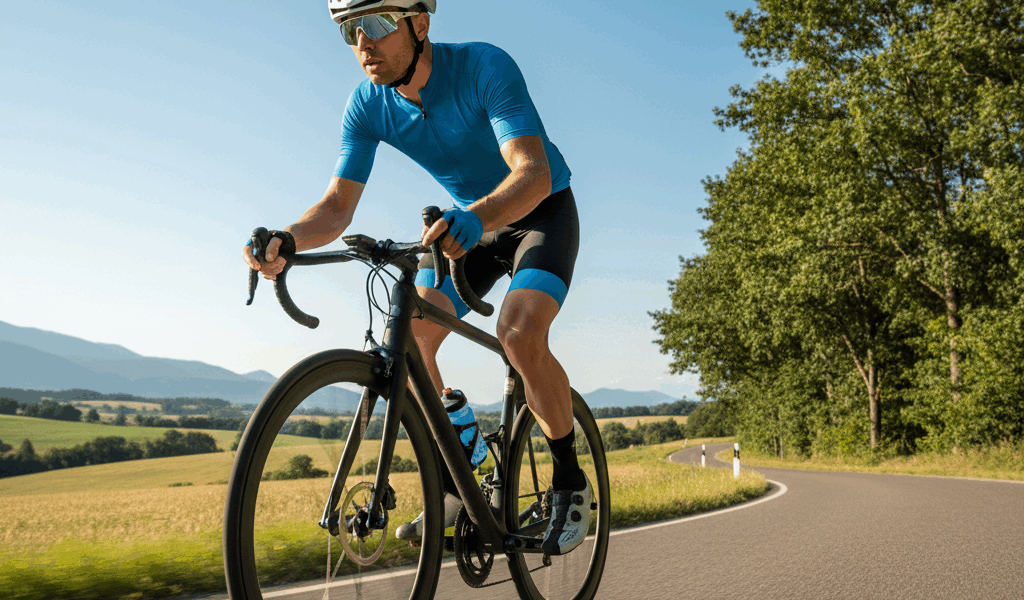
Cycling health claims have gotten complicated with all the “X minutes per day” social media advice flying around. As someone who’s spent years studying the research on exercise physiology and what cycling specifically does to the human body, I’ve learned everything there is to know about what the evidence actually shows — including several findings that will surprise people who think they already know why they’re riding. Today, I’ll share it all with you.
Your doctor will tell you that cycling is good exercise. What your doctor probably won’t tell you is just how specific and significant the health effects are — effects that go well beyond cardiovascular fitness and calorie burning. The research on cycling’s health benefits has accumulated significantly over the past decade, and several findings are surprising enough that they challenge how most people think about why they’re riding.
The Cardiovascular Benefits Are Bigger Than You Think
A 2017 study published in the British Medical Journal, tracking over 260,000 participants over five years, found that regular cycling to work was associated with a 45% lower risk of cancer and a 46% lower risk of cardiovascular disease compared to non-cyclists. Not reduced risk — nearly halved risk. The study controlled for other factors including walking, diet, and socioeconomic variables. The effect size surprised even the researchers. That’s what makes cycling research endearing to us who follow exercise science — the effect sizes are consistently larger than expected.
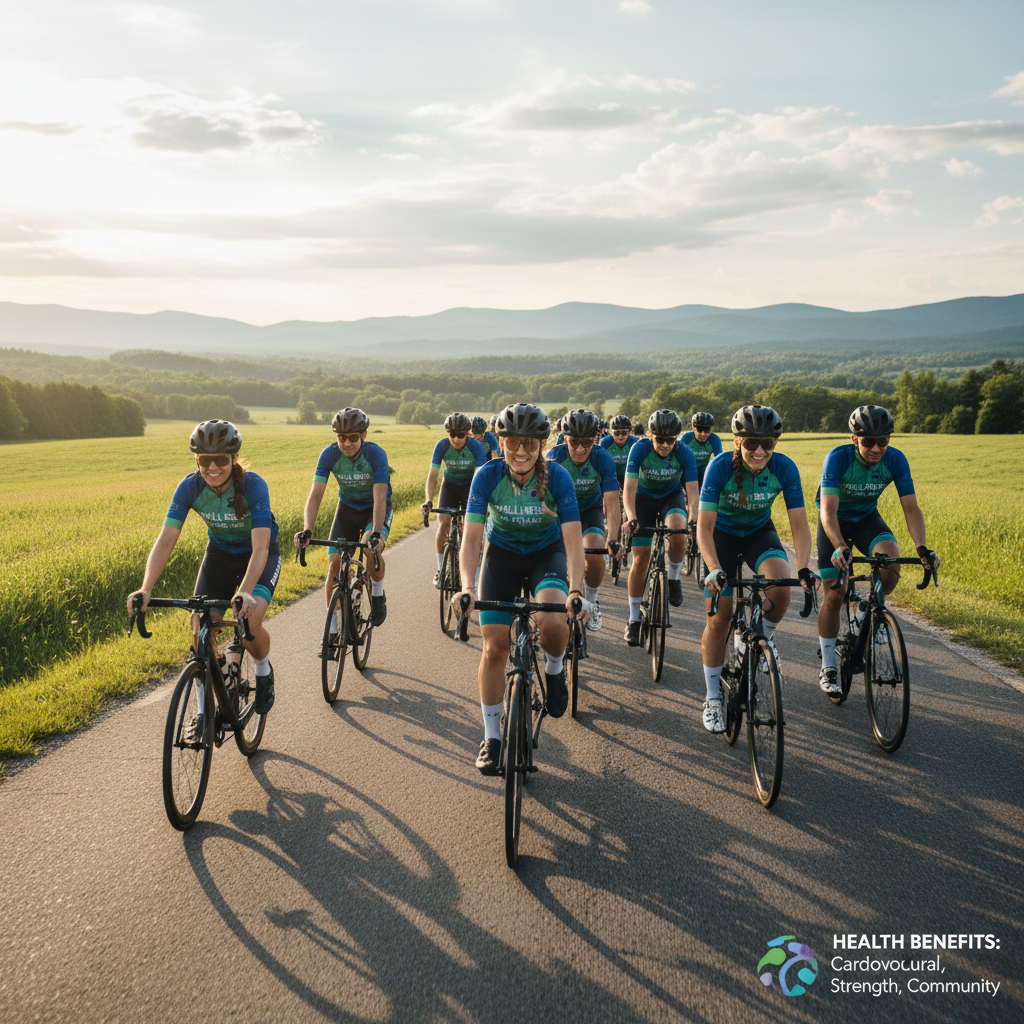
What makes cycling particularly effective cardiovascularly isn’t just that it elevates heart rate — most aerobic exercise does that. It’s that cycling allows sustained elevated heart rate without the joint impact that limits how long many people can sustain other forms of exercise. A 45-minute cycling session can deliver more total cardiovascular load than a 45-minute run for many middle-aged adults, because the cyclist isn’t limited by knee pain, shin splints, or foot soreness that would cut a run short.
Mental Health: The Effect Most Riders Already Know About
Cycling’s effect on mental health is among its most consistent and reproducible benefits, but it works through more mechanisms than most people realize. The obvious one: aerobic exercise produces endorphins and reduces cortisol, the stress hormone. Less obvious: outdoor cycling specifically adds environmental exposure that enhances the effect.
A 2015 Stanford study found measurable reductions in neural activity in the region of the brain associated with rumination — repetitive negative thinking associated with depression and anxiety — after 90-minute walks in natural settings, compared to urban settings or indoor treadmill exercise. Cycling outdoors combines the aerobic benefit with this environmental exposure in a way that cycling on a stationary bike cannot fully replicate. I’m apparently one of those riders who started cycling for fitness and stayed for the mental health benefits — and the research validates what I noticed anecdotally.
The social dimension of cycling also matters. Group riding provides the social connection that research consistently identifies as one of the most protective factors for mental health. The combination of physical exertion, outdoor exposure, and social engagement during a group ride hits multiple mental health levers simultaneously. Probably should have led with that, honestly — it’s the benefit that actually keeps most people riding long-term.
Joint Health: The Paradox
Frustrated by arthritic knees that make running impossible, many people discover cycling as the exercise that actually works for them — and the mechanism is somewhat counterintuitive. The cyclical loading of the knee joint during cycling — enough to maintain cartilage health and strengthen the muscles around the joint, but not enough to cause the impact forces that damage already-compromised cartilage — actually improves joint health for many people who would suffer doing weight-bearing exercises.
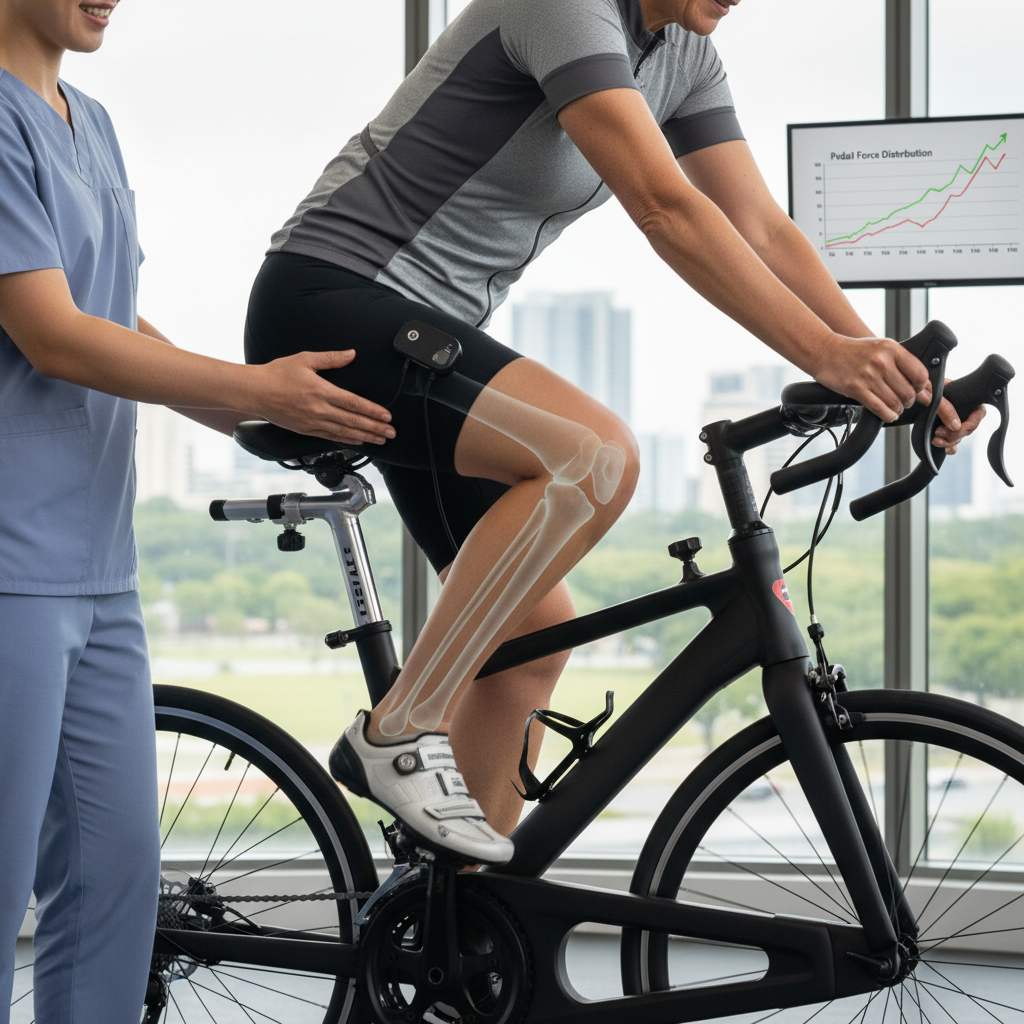
The key factors are saddle height and resistance. A properly fitted bike with the saddle at the correct height — where the knee is at approximately 25-35 degrees of bend at the bottom of the pedal stroke — distributes force across the knee joint in a way that minimizes shear stress on the patella. A moderate resistance and cadence in the 70-90 RPM range is typically recommended for knee health, rather than very light resistance at very high cadence.
Metabolic Health and Longevity
A large-scale study tracking Danish participants over 14 years found that cycling was associated with a 28% reduction in all-cause mortality. The effect was dose-dependent — more cycling correlated with lower mortality rates — but even modest amounts of regular cycling showed measurable effects. For people managing type 2 diabetes or prediabetes, cycling is among the most effective interventions. The combination of muscle activation in large muscle groups with sustained aerobic effort makes cycling unusually efficient at improving glucose uptake and insulin sensitivity.
The Bone Density Caveat
One legitimate limitation of cycling as a primary exercise: it doesn’t build bone density the way weight-bearing exercise does. Cycling is non-impact, which protects joints but also means bones don’t receive the loading stimulus that triggers bone-building activity. Cyclists who don’t include weight-bearing exercise — walking, running, resistance training — may be missing a component of overall musculoskeletal health that cycling alone doesn’t provide.
The practical recommendation: add two sessions of weight-bearing exercise per week. A 30-minute strength training session is enough to maintain bone density for most people. The cardiovascular and metabolic benefits of cycling are exceptional; protect them by not neglecting the one area where cycling doesn’t deliver.




Leave a Reply