Shimano Claris vs Sora — Is the Upgrade Worth $100?
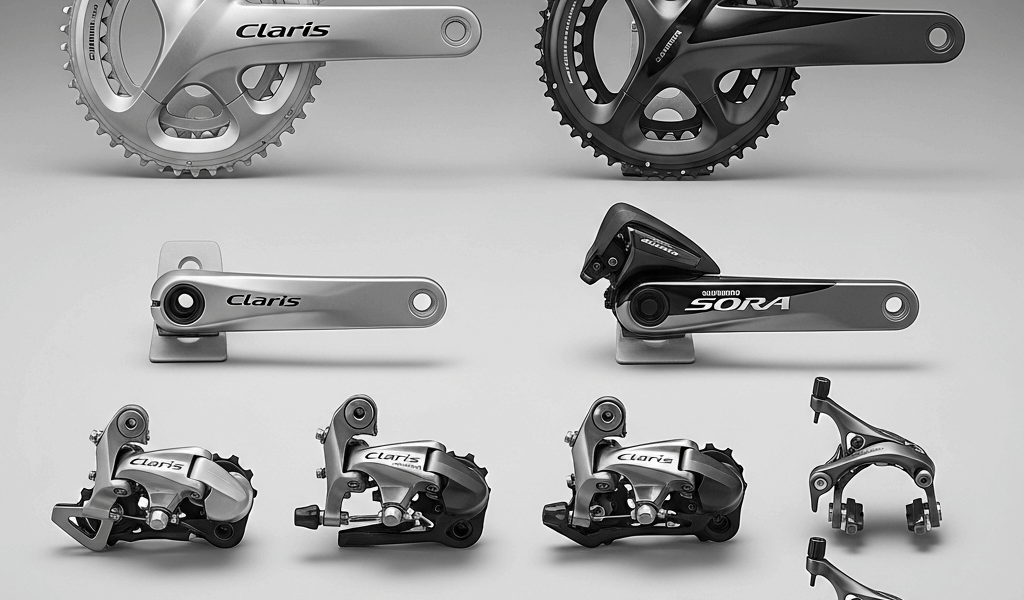
Shimano Claris vs Sora has gotten less clear-cut with all the spec-sheet noise flying around. Stand in a bike shop holding two build sheets with a $100 difference and suddenly everyone online has a hot take — none of which actually help you decide. I’ve been there. Spent about forty minutes interrogating a very patient shop employee at my local Performance Bike before it closed down, walked out still uncertain, and rode a Claris bike for three months before I ever touched a Sora setup. What I wish someone had told me then is what I’m going to tell you now — not another component breakdown, but an actual verdict. One that accounts for who you are, how you ride, and whether that extra hundred dollars does anything meaningful once you’re clipped in and rolling.
This article includes affiliate links. We may earn a commission at no extra cost to you.
The Real Differences That Matter
Let’s cut through the marketing. Claris is 8-speed. Sora is 9-speed. That’s the headline difference — and for a lot of casual riders, it’s where the conversation ends. But the gap between these two groupsets goes a bit deeper than rear cassette tooth count. Honestly, the part nobody talks about enough is what that one extra gear actually does to your riding experience on real terrain.
8-Speed vs 9-Speed — What One Gear Actually Changes
That jump from 8 to 9 speeds means tighter gear spacing across the cassette. Smaller jumps between gears. With Claris running something like an 11-32t cassette, the steps between cogs are noticeable — you’ll be spinning out one gear and immediately feel like the next one is too hard. Sora smooths that out. Not dramatically, but measurably. Flat roads? You’ll rarely care. A 6% grade that stretches on for two miles? You’ll notice. That’s where the ninth gear earns its place.
Cable Routing — The Invisible Upgrade
Here’s the one people don’t talk about enough. Sora-equipped bikes — particularly at the handlebar lever level — often come with cleaner cable routing options. The ST-R3000 series levers run cables internally through the lever hood on some builds, giving the front of the bars a tidier look. Claris levers, the ST-2000 series, run external cables that loop visibly at the handlebar. Functionally identical. Aesthetically, one looks like a beginner bike and one doesn’t. That matters to some people. It genuinely doesn’t matter to others. Neither camp is wrong.
Shifting Feel — This One Is Real
Rode a Trek Domane AL 2 with Claris back in 2021 — shifting was fine, serviceable, nothing to complain about on a Tuesday evening group ride. Then I borrowed a friend’s bike with Sora for a century ride and felt the difference immediately in the first few miles. Sora’s lever action is slightly lighter. The clicks are crisper. Not 105-level crisp — not even close — but better. Whether that difference justifies $100 depends entirely on how fussy you are about tactile feedback. Some riders never notice. I did.
What $100 Extra Actually Gets You
Worth saying out loud. Because when you strip it down, here’s what you’re actually buying for that extra hundred dollars:
- One additional gear in the rear (9 vs 8)
- Marginally tighter gear spacing on climbs
- Slightly improved lever ergonomics and action
- Cleaner cable routing on most builds
- A groupset that sits one rung higher on the Shimano road hierarchy
What you are not buying is a dramatic performance leap. Both Claris and Sora use the same basic dual-pivot brake architecture. Both use the same fundamental shifting mechanism. Neither has carbon fiber components, hollow-pin chains, or titanium hardware. The weight difference between a full Claris groupset and a full Sora groupset is roughly 100-150 grams depending on crank length and cassette choice — the weight of a small apple. You will not feel it.
So the $100 question isn’t really about performance. It’s about that one extra gear and whether cleaner aesthetics and slightly better feel are worth it to you personally. For some riders, absolutely yes. For others, that $100 goes toward a better saddle, a second set of tires, or a decent floor pump. These decisions are never universal — and anyone who tells you otherwise is selling something.
When Claris Is Perfectly Fine
Frustrated by vague advice online, I started asking cyclists in my local club a blunt question — “Do you actually wish you had Sora instead of Claris?” The answers from Claris riders were almost always the same. No. Not really.
Casual Commuting and Urban Riding
If your rides are 10-15 miles on relatively flat terrain, Claris does everything you need. Stop-and-go city riding doesn’t stress a groupset — you’re not running through all 8 gears in any structured way. You’re picking a comfortable gear and pedaling. Claris handles that for years without complaint. I know a commuter in Portland who’s been running an older 2300-series groupset — essentially pre-Claris — for four years without a single drivetrain issue. That’s not an outlier. That’s just what happens when you’re not pushing components hard.
Your First Road Bike
Don’t do what I did. Buying your first road bike is not the time to spend up on components. The frame matters more. The fit matters more. Whether you’ll actually ride the thing consistently matters most. Claris on a solid aluminum frame from Trek, Giant, or Specialized — the AL 2 series, the Contend 3, the Allez base — is a genuinely good first setup. Ride it for a year, figure out what you actually want, then make informed upgrade decisions with real saddle time behind you.
The Winter Beater
Wet roads and road salt destroy components — I learned this the hard way running a 105 groupset through an Ohio winter. Never again. Your winter training bike should run cheap, replaceable components. Claris fits that role perfectly. When the chain wears out, a Shimano CN-HG71 8-speed chain runs about $12. Cassettes are cheap. Cables are cheap. Claris makes real financial sense as a drivetrain you’re willing to sacrifice to the elements without losing sleep over it.
When Sora Is Worth the Upgrade
There are specific situations where I’d tell someone to spend the extra hundred without hesitation. A few of them might surprise you.
Hilly or Rolling Terrain Is Your Reality
Living somewhere with sustained climbs changes the math entirely. That ninth gear isn’t abstract anymore — on a long 8% grade, the difference between grinding through a gear gap and finding that perfect cadence is the difference between suffering and suffering slightly less efficiently. Sora’s tighter cassette spacing gives you more options on terrain that actually demands them. If your regular routes include 2,000 feet of climbing per 40-mile ride, Sora earns its keep. That’s where the upgrade stops feeling optional.
You Care How the Bike Looks
This is a legitimate reason — apparently more people need permission to admit that than you’d expect. Not everyone buys a road bike purely for athletic performance. Some people buy a road bike because they want something that looks good leaning against a coffee shop wall on a Saturday morning. Sora-equipped bikes, especially with internal cable routing at the levers, look sharper. The cleaner cockpit reads as more deliberate. If aesthetics factor into your enjoyment of a bike — and for many riders they absolutely do — Sora delivers a visibly cleaner result. That’s worth something real.
You’re Keeping This Bike for Three or More Years
Depreciated over time, $100 becomes almost nothing. If you’re buying a bike with the genuine intention of riding it seriously for three-plus years, the incremental quality of Sora’s components adds up. The slightly better shifting feel, the extra gear, the cleaner aesthetics — none of it is dramatic on day one, but it accumulates. The question of whether the upgrade is worth it changes completely when you factor in how long you’re amortizing that cost across actual rides.
Skip Both and Save for 105?
The elephant in the room deserves an honest look.
Shimano 105 — specifically the R7000 series in mechanical, or the R7100 in 12-speed — is a different category of groupset entirely. The shift action is noticeably better. Components are lighter. Braking performance is improved. And 105 has been the benchmark for “serious but not professional” road cycling for decades, for good reason. It shows up on bikes starting around $1,200-$1,500 new, though R7000-equipped builds turn up secondhand for considerably less — sometimes shockingly less.
Here’s the honest case for skipping both entry-level options. If you’re already considering spending the extra $100 for Sora over Claris, you’ve already demonstrated you care about component quality. That instinct doesn’t disappear once you start riding. Riders who buy Claris or Sora frequently find themselves wanting to upgrade within 18 months — they do a ride with someone on 105, feel the difference in the levers on the first descent, and start pricing out upgrade paths that same evening.
The upgrade path from Claris or Sora to 105 is not simple. You typically can’t just swap a rear derailleur. Cassette tooth counts change, chain speed changes, sometimes the shifters require full brake cable replacement. You’re often better off buying a 105-equipped bike from the start — if you’re serious about where this hobby is heading for you.
A lot of smart cyclists end up buying a used 105-equipped bike from 2017-2019 for the same price as a new Claris bike in 2024. A used Trek Émonda SL 5 or Giant Defy Advanced 2 from that era with R7000 105 beats a new Claris bike in almost every meaningful way. Worth a hard look before you commit to anything new at the entry level.
That said — not everyone is shopping for a long-term serious road bike. Some people want a simple, affordable bike that works and nothing more. For them, this calculation doesn’t apply. Know which camp you’re in before you open your wallet.
The Verdict
If you’re commuting, just getting into road cycling, or need a dedicated winter bike — buy Claris. Save the hundred dollars. Spend it on a helmet, a good lock, or a cycling computer that will genuinely improve your experience more than a ninth gear ever will.
If you ride hilly routes regularly, plan to own this bike for years, or genuinely care about how your cockpit looks — spend the extra hundred. Sora is the better product. Not dramatically better, but better in ways you’ll actually feel over time. That matters more than any spec sheet will tell you.
And if you’re already stretching your budget toward Sora, stop. Do the math on a used 105 bike first. You might find the smarter move is skipping this whole debate entirely — and that’s probably the best advice in this entire article.

Leave a Reply